


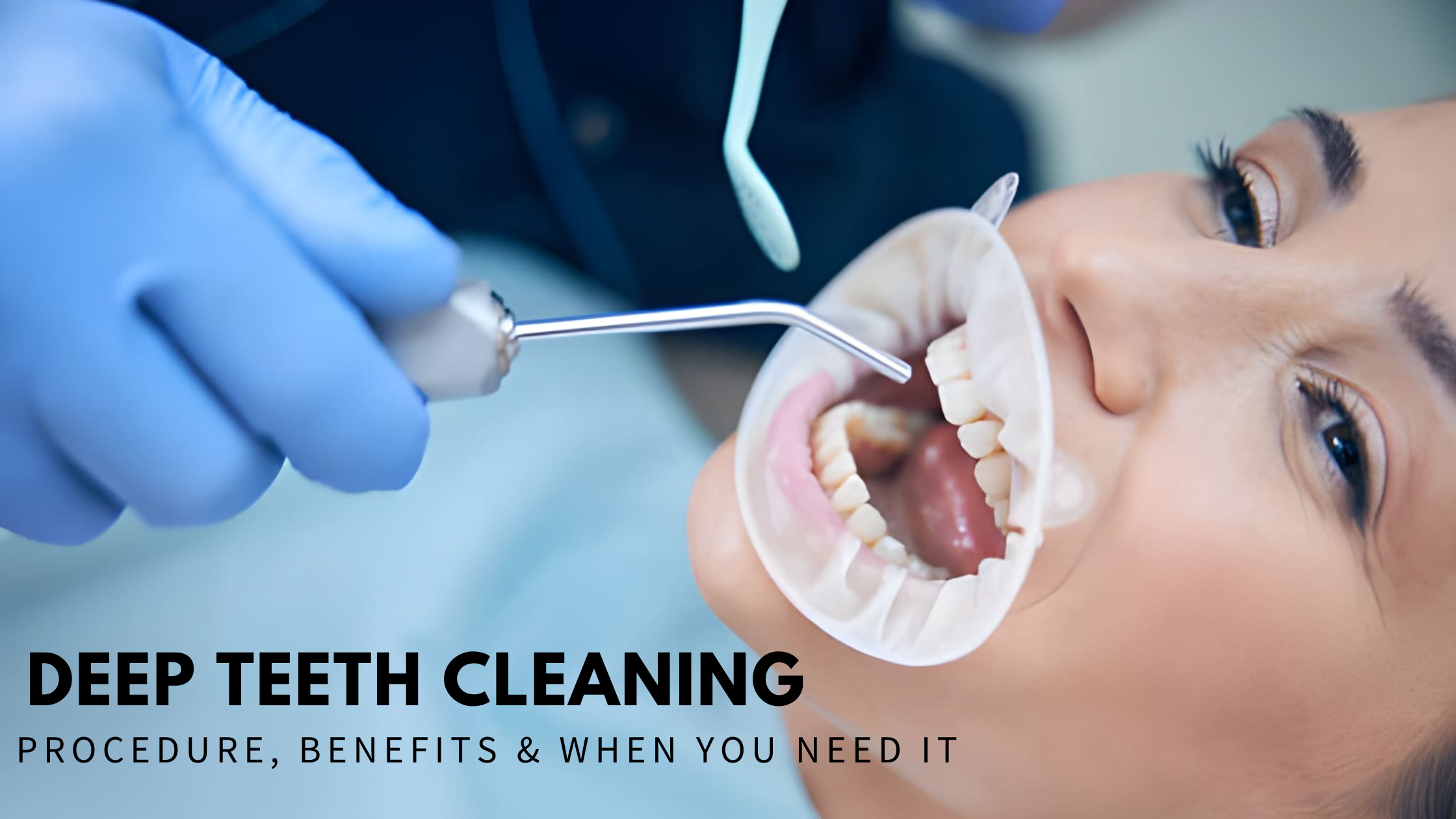
Has your dentist suggested that you could require ‘more than just a regular cleaning’, or have you ever had bleeding gums when brushing your teeth? Persistent bleeding, gum inflammation, or gum recession are signs that your oral health may need more extensive care. When regular maintenance is no longer sufficient to prevent gum disease, many patients find they require extensive teeth cleaning. Deep cleaning, often referred to medically as scaling and root planing, is a specialized dental technique that targets germs and accumulation beneath the gum line to cure gum disease. This thorough guide will teach you all you need to know about deep teeth cleaning, from the specific stages involved in the operation to its transformative advantages. It will also help you understand when this treatment is necessary and how it might rescue your smile.
What Is Deep Teeth Cleaning?
Understanding the Difference
Regular dental visits are not the same as deep cleaning your teeth. Deep teeth cleaning goes well beyond routine teeth cleaning, also known as prophylaxis, which concentrates on eliminating plaque and tartar from visible tooth surfaces above the gum line. Professionally referred to as scaling and root planing, this sophisticated process targets the hidden regions beneath your gum line that are inaccessible with standard cleaning tools.
Preventing tooth loss and treating periodontal disease are the main goals of thorough dental cleaning. A serious oral health issue that calls for more involved intervention than routine preventative care is being addressed when you see a gum cleaning dentist.
Why It Goes Deeper
Knowing what goes on behind your gums is the first step towards understanding why deep dental cleaning becomes essential. Your teeth are continuously covered in plaque, a sticky layer of bacteria. It solidifies as tartar, which can spread below the gum line if it is not eliminated by appropriate brushing and routine teeth cleaning. Your body’s immune system is triggered by this bacterial invasion, which results in gum inflammation and the formation of periodontal pockets—areas where bacteria flourish between your teeth and gums.
Gum disease doesn’t go away on its own; it progresses. These pockets develop, bacteria proliferate, and the infection worsens in the absence of scaling and root planing therapy from a licensed gum cleaning dentist. The bone that supports your teeth is eventually destroyed by this process, which causes tooth loss and movement. By breaking this damaging cycle, deep cleaning your teeth allows your gums to recover and healthily reconnect to your teeth.
The Deep Cleaning Procedure: What to Expect
Before the Procedure
A thorough examination by your gum cleaning dentist is the first step on the path to healthy gums. They will undergo periodontal probing, which involves measuring the depth of pockets surrounding each tooth using a specialized tool. Pocket depths of 1-3 millimetres are typical for healthy gums; however, measures of 4mm or more frequently suggest that teeth need to be thoroughly cleaned.
To assess any bone loss brought on by worsening gum disease, your dentist will also take X-rays. These pictures aid in the development of your treatment plan and offer vital details regarding the degree of damage. Prior to starting the scaling and root planing process, you will talk about your alternatives for an anaesthetic. Since deep teeth cleaning entails working in delicate areas beneath the gum line, the majority of patients are given local anaesthesia to ensure their comfort throughout the procedure.
During Scaling
Thoroughly eliminating plaque and tartar buildup from tooth surfaces and beneath the gum line—areas that are inaccessible with routine teeth cleaning—is the primary goal of the scaling phase of thorough teeth cleaning. Your dentist will use specialized equipment, such as hand tools called curettes for precise cleaning in confined spots and ultrasonic scalers that vibrate at high frequencies to break up tenacious tartar.
In order to ensure thoroughness without taxing your system, the technique usually treats one quadrant of your mouth per session. The length of each session typically ranges from 45 to an hour, depending on how severe the accumulation is. You won’t feel pain while you’re numbed, but you will sense pressure and vibrations. Additionally, a cooling water mist is sprayed by the ultrasonic scaler to help remove any loosened particles.
During Root Planing
Root planing takes care of the tooth roots after scaling. This crucial process is flattening the tooth roots’ rough surfaces, which are familiar places for germs to grow. It’s similar to sanding down wood to make it smooth, but your gum cleaning dentist is making it harder for germs to reattach.
For healing to be successful, root surfaces must be smooth. Rough, uneven roots make it difficult for gums to correctly reattach to teeth and give bacteria ideal hiding places. Your dentist provides your gum tissue the best chance to repair and reduce those periodontal pockets by smoothing these surfaces during deep tooth cleaning. By encouraging your gums to fit tightly between your teeth once more, this procedure restores the barrier that keeps bacteria away.
After the Procedure
You’ll probably experience some sensitivity in the treated regions right after your scaling and root planing procedure. This is entirely typical. Temperature sensitivity while eating hot or cold meals, minor bleeding when brushing, and general gum pain are common side effects. Usually, these symptoms go away in a few days to a week.
The majority of gum cleaning dentists split the procedure across two to four appointments, treating one or two quadrants at a time, due to the extensive and rigorous nature of deep tooth cleaning. This method facilitates appropriate recovery in between sessions and makes the process easier to handle. The severity of your gum disease will determine how long it takes you to heal, but most patients see noticeable results two to three weeks after finishing all of the sessions.
Benefits of Deep Teeth Cleaning
Halts Gum Disease Progression
Preventing gum disease in its tracks is the most significant direct advantage of deep cleaning teeth. By removing the infection-causing germs that are concealed in periodontal pockets, scaling and root planing eradicate the cause of inflammation. This treatment is essential to stop mild gingivitis from developing into severe periodontitis, which is the stage at which permanent bone loss occurs.
According to research, early to moderate gum disease can be successfully treated and, in many cases, reversed with appropriate deep tooth cleaning and ongoing maintenance. You can prevent the disastrous effects of severe periodontal disease, heal your gums, and lessen the depth of pockets.
Protects Your Teeth
Tooth loss due to bone degradation is directly prevented by deep cleaning of teeth. In addition to cleaning, your gum cleaning dentist is protecting the structure that supports your teeth when they do scaling and root planing. The process halts the continuous deterioration of the bone and connective tissue that support your teeth by eliminating bacterial infections.
This protection entails keeping your natural teeth longer and preventing the need for more costly and intrusive operations down the road, such as dentures, dental implants, or tooth extractions. Each natural tooth preserved by thorough teeth cleaning stands for preserved chewing ability, support for the facial structure, and general well-being.
Improves Overall Health
Deep cleaning your teeth has several advantages outside of your mouth. Extensive studies have demonstrated strong links between systemic health issues and periodontal disease. Gum infection bacteria can enter your bloodstream, which can aggravate diabetes management, raise your risk of heart disease, and increase your chance of stroke.
You can lessen systemic inflammation all over your body by getting rid of these bacterial colonies through scaling and root planing. After a successful deep teeth cleaning procedure, many patients report feeling more energized and having better general health. Additionally, since periodontal infections are frequently the cause of chronic bad breath, getting rid of the germs that cause gum disease significantly improves breath freshness.
Prevents Bone Loss
Untreated gum disease gradually erodes the jawbone that supports your teeth, in addition to affecting soft tissue. More than simply tooth stability is impacted by this bone loss; your facial shape and look are also impacted. Your face may appear sunken and aged when bone deteriorates.
This bone deterioration is prevented by a competent gum cleaning dentist thoroughly cleaning teeth. Maintaining the density of your jawbone is also essential if you ever need dental implants, since they need enough bone to be appropriately placed. In essence, the scale and root planing process preserves your facial structure and preserves your alternatives for tooth replacement in the future.
Cost-Effective Prevention
Even while deep teeth cleaning is more expensive than regular teeth cleaning, it’s incredibly economical when weighed against future dental bills. Think about how expensive it can be to replace a single tooth with an implant, and how much more costly it is to treat advanced periodontal disease surgically.
Since scaling and root planing are essential periodontal treatments that help avoid more expensive operations, many dental insurance plans cover them. Avoiding the cost of tooth replacement, significant gum surgery, or dealing with the health issues brought on by untreated gum disease can now be achieved by investing in deep cleaning teeth. Instead of spending on the treatment of more serious problems later on, it is truly an investment in prevention.
When Do You Need Deep Teeth Cleaning?
Signs and Symptoms
Paying attention to the warning indications your body gives you is the first step in determining when you need to clean your teeth deeply. It is never normal to have bleeding gums when brushing or flossing because this is frequently the first sign of gum disease. Bacterial infections beneath the gum line are also indicated by persistent foul breath (halitosis) that does not go away with routine tooth cleaning and proper oral care.
Additional indications that need to be examined by a gum cleaning dentist include receding gums that give the impression that your teeth are longer, loose or shifting teeth, changes in the way your bite feels, pus forming between your teeth and gums, and gums that are red, inflamed, or sensitive to the touch. A periodontal assessment should be scheduled right away if any of these symptoms are present.
Diagnostic Indicators
To ascertain whether you require extensive teeth cleaning, your gum-cleaning dentist employs precise measurements and diagnostic equipment. The depth of the periodontal pocket is the most important sign. Treatment with scaling and root planing is usually necessary for pockets that are 4 mm or deeper. In order to map the degree and extent of gum disease, the dentist takes measurements around each tooth during your examination.
Bone loss that is imperceptible to the naked eye can be seen on X-rays. Deep cleaning teeth becomes crucial to stop additional damage if your dentist notices bone degeneration on radiographs. The necessity of this sophisticated operation is also unmistakably demonstrated by clinical attachment loss, in which gum tissue has separated from teeth, and visible tartar accumulation beneath the gum line.
Risk Factors
You are more likely to require extensive teeth cleaning if certain conditions are met. Because smoking and tobacco use limit blood flow to gum tissue and hinder healing, they significantly increase the risk of gum disease. Because they are less able to fight off infections and cure themselves, people with diabetes are more likely to develop periodontal disease.
A significant factor is genetic susceptibility; regardless of their dental hygiene practices, some people are born with a propensity for severe gum disease. Vulnerability is increased by poor dental hygiene, hormonal changes during pregnancy or menopause, and some drugs that cause dry mouth, which lessens the preventive effects of saliva. Another factor is age, as the risk of gum disease rises sharply beyond the age of thirty.
Your Dentist’s Recommendation
Deep cleaning teeth is sometimes required, even with good at-home care and routine dental cleanings. Have faith in your gum cleaning dentist’s expert evaluation; they can detect and quantify issues before you notice them. Standard teeth brushing is no longer enough to keep your gums healthy if your dentist suggests scaling and root planing.
Many patients need more regular maintenance sessions after their first deep teeth cleaning, usually every three to four months rather than the usual six-month interval. Long-term success depends on these periodontal maintenance cleanings, which stop disease recurrence.
Aftercare and Maintenance
Immediate Aftercare
Optimal recovery is ensured by proper maintenance after deep cleaning. It’s crucial to control any short-term sensitivity; your gum cleaning dentist can suggest desensitizing toothpaste for a few weeks. Reducing inflammation and accelerating healing can be achieved with mild saltwater rinses, which involve combining half a teaspoon of salt with warm water. After meals, swish for 30 seconds.
Avoid meals that could irritate healing gums for a while, such as those that are very hot, cold, spicy, or crunchy. Ibuprofen and other over-the-counter painkillers are good for managing any discomfort. The majority of soreness goes away in a few days, but if it gets worse or lasts more than a week, get in touch with your gum cleaning dentist.
Long-Term Maintenance
Your dedication to maintaining good oral hygiene at home is crucial to the effectiveness of scaling and root planing. Use the proper technique when brushing twice a day: make gentle circular motions with your toothbrush angled at a 45-degree angle toward the gum line. Bacteria in the spaces between teeth that brushing cannot reach are eliminated by daily flossing.
After deep cleaning, the majority of patients require more frequent professional teeth cleaning treatments, ideally every three to four months instead of every six months. During these follow-up appointments, your gum cleaning dentist keeps an eye on your healing process and guards against disease recurrence. Your dentist may recommend antimicrobial mouthwashes to help manage bacterial populations in between appointments.
Long-term results are greatly impacted by changes in lifestyle. Giving up smoking significantly speeds up healing and lowers your risk of developing gum disease in the future. Gum health is also supported by managing systemic diseases like diabetes. Whether scaling and root planing yield long-lasting improvements depends on your dedication to these care techniques.
Conclusion
Professionally referred to as scale and root planing, deep cleaning teeth is a crucial gum disease treatment that goes beyond what regular tooth cleaning can do. This process maintains your general health, stops the advancement of disease, prevents tooth loss, and eliminates microorganisms that cause infections from beneath the gum line. Deep teeth cleaning by a licensed gum cleaning dentist can preserve your natural teeth and avoid major health issues, but it is more involved than regular dental appointments.
The earlier gum disease is detected and treated with scaling and root planing, the better your results. Prevention and early intervention are crucial. Don’t put off seeing your gum cleaning dentist for a periodontal evaluation if you have symptoms like bleeding gums, chronic bad breath, or gum recession. Millions of people have been able to maintain their health and smiles thanks to this safe and efficient process.
Act now. To find out if you require deep teeth cleaning, schedule a thorough periodontal evaluation at Sunrise Mall Dental. Investing in this preventive procedure will benefit your future self by safeguarding not just your teeth but also your general health and quality of life for many years to come.
For more services, you can visit our website: https://sunrisemalldental.com/general/
